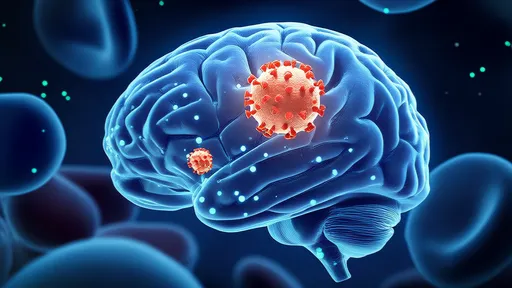
In the ever-evolving landscape of infectious diseases, the ability to predict viral spillover events has long been a holy grail for epidemiologists and public health officials. Traditional methods, reliant on surveillance and reactive measures, are often one step behind the rapidly mutating pathogens that jump from animal reservoirs to human populations. Now, a paradigm shift is underway, driven by the power of machine learning. Researchers are increasingly turning to sophisticated computational models to forecast which viruses are most likely to make the cross-species leap, potentially offering a crucial early warning system for the next pandemic.
The fundamental challenge in predicting viral host jumps lies in the immense complexity of the factors involved. It is not merely a matter of a virus randomly mutating until it stumbles upon the right genetic combination. Instead, it is a intricate dance between the virus's genomic architecture, the cellular environment of the potential new host, and the ecological circumstances that bring them into contact. Machine learning algorithms, particularly those in the realm of deep learning, are uniquely suited to untangle these multidimensional puzzles. By ingesting vast datasets—including viral genome sequences, protein structures, phylogenetic trees, and ecological metadata—these models can identify subtle, non-linear patterns that are invisible to the human eye and traditional statistical analyses.
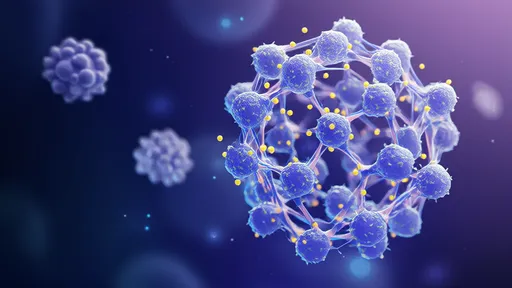
One of the most promising approaches involves analyzing the compatibility between viral surface proteins and host cell receptors. The initial step of infection often requires the virus's key, a protein like the spike protein in coronaviruses, to fit into the host's lock, a receptor like the ACE2 protein in humans. Machine learning models are being trained to predict the binding affinity between these proteins across different species. By learning from thousands of known virus-host interactions, a model can assess the likelihood that a virus found in a bat or a rodent could effectively bind to human receptors, even if that specific combination has never been observed in nature.
Beyond molecular compatibility, ecological context is paramount. A virus may be perfectly primed to infect humans at a genetic level, but if humans never encounter the animal carrying it, spillover will not occur. This is where another layer of machine learning comes into play. Models are integrating geospatial data, land-use change maps, climate variables, and wildlife trade information to predict hotspots of human-animal interaction. By overlaying viral trait predictions with ecological risk maps, scientists can create high-resolution forecasts pinpointing not just which viruses, but also where and when the risk of emergence is greatest. This allows for targeted surveillance in specific animal populations or geographic regions, a far more efficient use of resources than blanket monitoring.
The data fueling these models is growing exponentially. Global initiatives like the Global Virome Project and PREDICT have been instrumental in building extensive libraries of viral genetic sequences from wildlife. Every new sequence added to databases like GenBank becomes a new data point for training more robust and accurate models. This is a classic example of where more data directly translates to better predictive power, as algorithms can learn a more comprehensive representation of viral diversity and the rules governing host adaptation.
However, the path forward is not without significant hurdles. The field grapples with the "black box" problem common in complex AI; sometimes, a model makes an accurate prediction, but researchers cannot easily discern the exact biological reasoning behind it. Furthermore, these models are only as good as the data they are trained on. Biases in sampling—where certain regions or animal species are over-represented—can lead to skewed predictions. There is also the constant danger of overfitting, where a model becomes too tailored to the existing data and fails to generalize to novel, unseen viruses. Overcoming these challenges requires close collaboration between computer scientists, virologists, and ecologists to build more interpretable and equitable models.
Despite these challenges, the potential applications are transformative. Imagine a global early-warning system that continuously analyzes viral data from around the world, flagging concerning variants with high spillover potential long before they cause outbreaks. Pharmaceutical companies could use these predictions to prioritize which virus families to develop broad-spectrum antivirals or vaccines against, a strategy known as prepandemic preparedness. Public health resources could be proactively deployed to reinforce healthcare systems in identified hotspots, potentially containing an outbreak at its source.
In conclusion, the integration of machine learning into virology and epidemiology marks a new frontier in our eternal battle against infectious diseases. While it does not provide a crystal ball, it offers a powerful probabilistic lens through which to view the future of viral threats. This technology does not replace traditional field work and fundamental virological research; rather, it amplifies it, turning raw data into actionable intelligence. As models become more refined and datasets more complete, our capacity to foresee and forestall the next pandemic will grow, moving us from a position of reaction to one of prediction and prevention.
By /Aug 27, 2025

By /Aug 27, 2025
By /Aug 27, 2025

By /Aug 27, 2025
By /Aug 27, 2025
By /Aug 27, 2025
By /Aug 27, 2025
By /Aug 27, 2025

By /Aug 27, 2025
By /Aug 27, 2025

By /Aug 27, 2025

By /Aug 27, 2025

By /Aug 27, 2025
By /Aug 27, 2025

By /Aug 27, 2025
By /Aug 27, 2025

By /Aug 27, 2025
By /Aug 27, 2025
By /Aug 27, 2025

By /Aug 27, 2025