In the sprawling concrete jungles that define our modern cities, a silent but profound evolutionary drama is unfolding. As human urbanization accelerates globally, countless animal species are confronting novel environments characterized by noise, artificial light, pollution, and fragmented habitats. While behavioral shifts in urban wildlife—from altered foraging strategies to changed reproductive timing—have been well-documented by ecologists, the underlying genetic mechanisms driving these adaptations have long remained enigmatic. Recent advances in genomic technologies, however, are beginning to peel back the layers of this complex process, offering unprecedented insights into how city life is literally rewriting the DNA of urban fauna.
The study of urban evolution represents a fascinating intersection of ecology, genetics, and behavioral science. For decades, researchers have observed that urban animals behave differently than their rural counterparts. City birds sing at higher pitches to overcome traffic noise, urban mammals become more nocturnal to avoid human activity, and countless species show reduced fear responses to human proximity. These observations raised a fundamental question: are these behavioral changes merely plastic, short-term responses to environmental stimuli, or do they represent genuine evolutionary adaptations encoded in the genome? The emerging field of urban evolutionary genomics is providing compelling evidence for the latter, revealing that urban environments are potent drivers of genetic change.
At the heart of this research revolution lies the ability to sequence and analyze entire genomes at unprecedented scale and affordability. Scientists can now compare the genetic makeup of urban and rural populations of the same species, identifying specific genes and genetic regions under selection pressure in cities. These genomic scans have revealed that urban adaptation isn't governed by a single "city gene" but rather involves complex changes across multiple genetic regions often related to neurological function, stress response, metabolism, and sensory perception. The genetic signatures of urban adaptation tell a story of intense natural selection operating on behavioral traits that determine survival and reproduction in human-dominated landscapes.
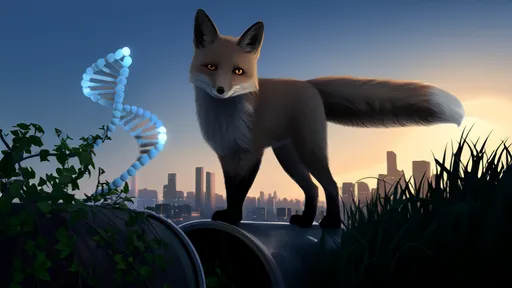
One of the most striking examples comes from studies of urban white-footed mice in New York City parks. Genomic analyses have revealed strong selection on genes related to spatial memory and exploratory behavior—traits that would clearly advantage mice navigating complex urban environments. Similarly, research on urban foxes shows selection on genes associated with reduced fear response and altered circadian rhythms, allowing these cunning canids to thrive in close proximity to humans. Perhaps most remarkably, studies of urban anole lizards in Puerto Rico have documented genetic changes related to limb morphology and locomotor performance, enabling better movement on artificial surfaces like walls and glass.
The pace of these genetic changes is particularly astonishing to evolutionary biologists. While we typically think of evolution as a gradual process unfolding over millennia, urban adaptation appears to be occurring at breathtaking speed—sometimes within just几十 generations. This rapid evolution is facilitated by the intense selective pressures of urban environments, where traits that might be marginally advantageous in natural settings become crucial for survival. Animals that cannot quickly adapt to novel urban challenges—avoiding vehicles, digesting human food waste, tolerating chemical pollutants—simply perish, creating strong selection for genetic variants that confer urban advantages.
Beyond identifying specific genes under selection, researchers are also investigating how urban environments affect broader genomic architecture. There is evidence that urban adaptation may involve changes in gene regulation rather than just protein-coding sequences. Epigenetic modifications—chemical changes to DNA that affect gene expression without altering the genetic code itself—appear to play a crucial role in urban adaptation. Studies of urban birds show differences in DNA methylation patterns related to stress response and metabolism, suggesting that cities may be driving changes in how genes are turned on and off in response to environmental challenges.
The implications of these findings extend far beyond academic interest. Understanding the genetic basis of urban adaptation has crucial conservation implications, particularly as urban areas continue to expand and fragment natural habitats. Species capable of rapid genetic adaptation may be more resilient to urbanization, while those with limited genetic variability or slow reproductive rates may face local extinction. This knowledge can inform conservation strategies, helping identify which species might naturally adapt to urban environments and which may require intervention to survive.
Furthermore, urban environments serve as fascinating natural laboratories for studying evolutionary processes in real-time. The predictable gradients of environmental change from city centers to rural peripheries create ideal conditions for investigating how selection pressures vary across space and time. Urban evolution studies offer unique insights into fundamental evolutionary questions about the pace of adaptation, the genetic basis of complex traits, and the interplay between genetic and plastic responses to environmental change.
Looking forward, the integration of genomic tools with traditional ecological approaches promises to revolutionize our understanding of urban wildlife. Advanced techniques like genome-wide association studies, transcriptomics, and CRISPR-based functional validation will allow researchers to move beyond correlation to causation, precisely identifying which genetic changes actually drive adaptive behaviors. Long-term genomic monitoring of urban populations will reveal how urban adaptation continues to unfold over time, particularly as cities themselves evolve through climate change, technological advancement, and changing human behaviors.
As we peer into the genetic blueprint of urban adaptation, we gain not only scientific knowledge but also a deeper appreciation for the remarkable resilience of life. The animals sharing our cities are not merely surviving—they are evolving, their genomes recording the story of adaptation to the Anthropocene. This ongoing evolutionary drama reminds us that evolution is not just a historical process but a dynamic, ongoing force shaping the biological world around us, even in the most human-dominated environments. The genomic evidence of urban adaptation ultimately tells a story of life's incredible capacity to persist and evolve, even in the face of humanity's most dramatic environmental transformations.
By /Aug 27, 2025
By /Aug 27, 2025
By /Aug 27, 2025

By /Aug 27, 2025
By /Aug 27, 2025
By /Aug 27, 2025
By /Aug 27, 2025

By /Aug 27, 2025
By /Aug 27, 2025
By /Aug 27, 2025
By /Aug 27, 2025

By /Aug 27, 2025

By /Aug 27, 2025

By /Aug 27, 2025

By /Aug 27, 2025
By /Aug 27, 2025
By /Aug 27, 2025

By /Aug 27, 2025

By /Aug 27, 2025

By /Aug 27, 2025