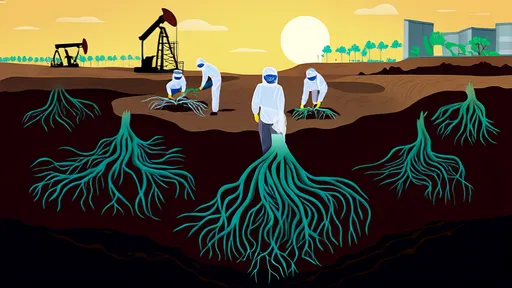
In a remarkable leap forward for environmental monitoring, scientists have unveiled a groundbreaking biosensing technology utilizing genetically modified bacteria to detect toxic substances with unprecedented precision. This innovation emerges at a critical juncture, as industrial pollution and chemical spills continue to pose severe threats to ecosystems and public health worldwide. The core of this advancement lies in the ingenious reprogramming of bacterial cells, transforming them into highly sensitive and specific living sensors capable of identifying a vast array of environmental contaminants, from heavy metals like mercury and lead to complex organic compounds such as pesticides and industrial solvents.
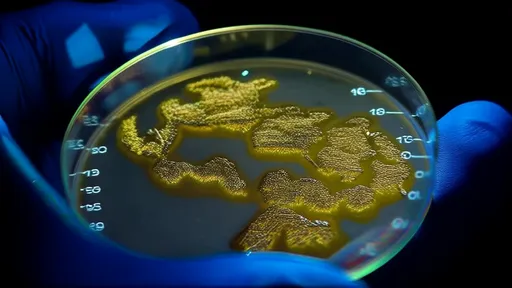
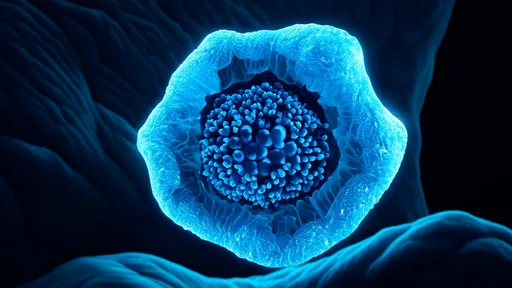
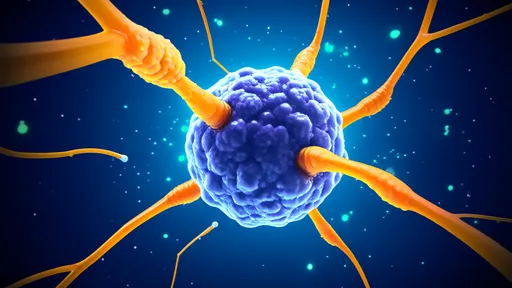
The scientific principle underpinning this technology is both elegant and powerful. Researchers have harnessed the natural genetic machinery of bacteria, inserting synthetic biological circuits that act as molecular switches. These circuits are designed to respond exclusively to the presence of a target toxin. When the bacterium encounters the specific contaminant, it triggers a cascade of genetic expressions, culminating in the production of a easily measurable signal. This signal is most commonly a visible output, such as the emission of bioluminescent light—a literal glow that indicates the presence and, with proper calibration, even the concentration of the harmful substance. This method effectively turns a biological organism into a precise analytical instrument.
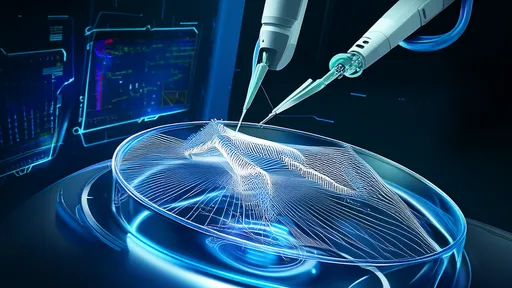
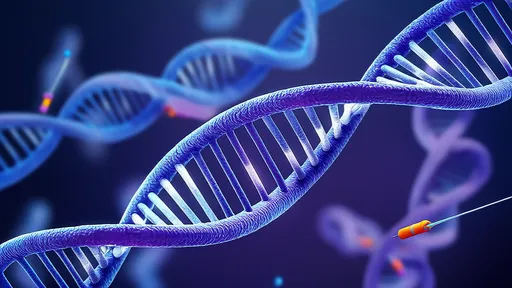
The development process is a feat of synthetic biology. It begins with the careful selection of a host bacterial strain, often a harmless variety of E. coli or other non-pathogenic microbes, ensuring environmental safety. The next, and most crucial, step involves the design and insertion of a genetic construct. This construct contains a promoter sequence—a region of DNA that acts like an "on" switch—which is specifically activated by the toxin of interest. This promoter is then linked to a reporter gene, the one responsible for producing the light signal. The entire genetic package is meticulously optimized to ensure maximum sensitivity, minimal false positives, and robust performance in complex real-world environments outside the controlled conditions of a laboratory.
The advantages of this bacterial biosensing system over traditional chemical analysis are profound and multifaceted. Conventional methods often require sophisticated, expensive laboratory equipment, highly trained personnel, and time-consuming sample collection and preparation processes, sometimes taking days or weeks to yield results. In stark contrast, these engineered bacteria offer the potential for real-time, on-site detection. Imagine a small, portable device containing a freeze-dried pellet of these bacterial sensors being deployed directly at a suspected spill site. Upon hydration and exposure, results could be available in a matter of hours, or even minutes, providing emergency responders and environmental agencies with immediate, actionable data to mitigate damage and protect communities.
Furthermore, the scalability and cost-effectiveness of producing these biological sensors present a significant advantage. Bacteria can be cultured rapidly and inexpensively in large bioreactors, making the production of sensor cells incredibly cheap compared to manufacturing complex electronic sensors or chemical assay kits. This low cost opens the door for the deployment of vast, distributed sensor networks. We could envisage a future where thousands of these tiny sentinels are strategically placed throughout watersheds, along coastlines, or near industrial facilities, creating a dense, always-on early warning system for environmental pollution on a scale previously unimaginable.
Of course, the path from laboratory breakthrough to widespread field application is not without its challenges. A primary concern among regulators and the public is the environmental release of genetically modified organisms (GMOs). Researchers are acutely aware of this and are pioneering several containment strategies. These include designing bacteria with "kill switches" that cause them to self-destruct after completing their sensing task or outside of a specific, controlled environment. Another approach is to use cell-free systems, where only the essential sensing machinery—the proteins and genetic material—is extracted and utilized, eliminating the need to release a live organism altogether. Rigorous testing and regulatory approval will be essential before any large-scale deployment.
Another hurdle is ensuring reliability amidst the chaotic and variable conditions of natural ecosystems. Factors like temperature fluctuations, competing microbial life, and the presence of other chemicals could potentially interfere with the sensor's function. Current research is intensely focused on enhancing the robustness of these biological systems. Scientists are engineering strains to be more resilient, refining the genetic circuits for greater specificity to avoid cross-reactivity, and developing advanced materials to house and protect the bacteria, allowing them to function consistently in diverse environments from freshwater streams to oceanic waters.
Looking ahead, the potential applications of this technology extend far beyond simply detecting known toxins. The platform is inherently adaptable. The genetic code can be rewritten to target new and emerging contaminants as they are identified, making it a versatile tool against future pollution threats. There is also exciting exploratory work into developing multi-functional bacterial systems that not only detect a toxin but also begin to break it down or remediate it upon detection, blending sensing with a cleanup function in a single, powerful package.
This breakthrough in bacterial biosensing technology represents a paradigm shift in how we monitor and protect our environment. It moves us away from reactive, slow, and centralized testing towards a proactive, rapid, and decentralized model of environmental surveillance. By leveraging the intricate power of biology, scientists are providing us with a powerful new lens through which to view the health of our planet, offering hope for a future where pollution is identified and neutralized with speed and precision that matches the scale of the challenges we face.
By /Aug 27, 2025

By /Aug 27, 2025
By /Aug 27, 2025
By /Aug 27, 2025
By /Aug 27, 2025
By /Aug 27, 2025
By /Aug 27, 2025
By /Aug 27, 2025

By /Aug 27, 2025
By /Aug 27, 2025
By /Aug 27, 2025
By /Aug 27, 2025

By /Aug 27, 2025
By /Aug 27, 2025
By /Aug 27, 2025
By /Aug 27, 2025
By /Aug 27, 2025
By /Aug 27, 2025
By /Aug 27, 2025
By /Aug 27, 2025