The mining industry stands at the precipice of a quiet revolution, one driven not by heavy machinery or explosive charges, but by microscopic organisms. For decades, the concept of using bacteria to extract valuable metals from ores was confined to academic journals and pilot studies, viewed as a fascinating but commercially unviable niche. Today, that perception is rapidly changing. The commercialization of biomining, specifically using acid-loving bacteria known as acidophiles, is transitioning from a promising alternative to a mainstream, economically sound practice that is reshaping the economics and environmental footprint of metal recovery.
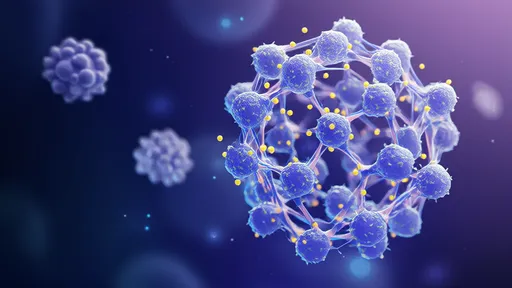
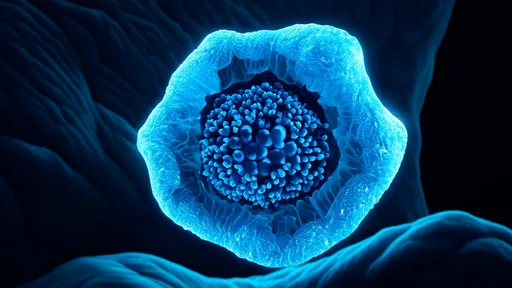
The principle behind biomining is as elegant as it is ancient, mirroring natural processes that have occurred for millennia. Certain bacteria, most notably from the genera Acidithiobacillus (like A. ferrooxidans and A. thiooxidans) and Leptospirillum, derive their energy from oxidizing inorganic compounds. In doing so, they catalyze the breakdown of mineral sulfides, liberating trapped metals like copper, gold, nickel, and uranium into a solution from which they can be easily recovered. These microbes thrive in extreme conditions—highly acidic, metal-rich environments that would be lethal to most life—making them perfectly suited for the task of processing low-grade ores and mineral wastes that traditional smelting finds uneconomical.
The drive towards commercial adoption has been fueled by a powerful confluence of economic and environmental pressures. Conventional pyrometallurgy, or smelting, is incredibly energy-intensive, requiring vast amounts of heat often generated by fossil fuels. This process releases significant quantities of greenhouse gases and other pollutants, including sulfur dioxide, a primary cause of acid rain. In contrast, biomining operates at ambient temperature and pressure, slashing energy consumption by up to 90% in some cases. It produces a fraction of the air emissions, positioning it as a cornerstone for the mining industry's efforts to decarbonize and meet increasingly stringent global environmental regulations.
Furthermore, the world's appetite for metals is insatiable and growing, driven by the global energy transition. The shift towards electric vehicles, wind turbines, and solar panels requires massive amounts of copper, cobalt, and other base metals. Simultaneously, high-grade ore deposits are becoming scarcer, forcing companies to process lower-grade ores and vast stockpiles of mine waste. Biomining offers a key to unlocking these resources. It is particularly effective for low-grade sulfidic ores, waste rock, and tailings—materials previously considered worthless. This transforms environmental liabilities into valuable assets, extending the life of mines and reducing the need for environmentally destructive new open-pit operations.
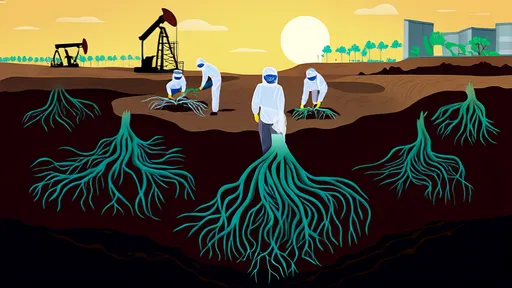
The practical application of this technology manifests primarily in two commercial processes: bioleaching and biooxidation. Bioleaching involves the direct extraction of metal from ore into an aqueous solution. The most widespread commercial application is in column, heap, and dump bioleaching for copper extraction. At mines across Chile, the United States, Australia, and elsewhere, low-grade copper ore is piled into massive heaps. A pre-cultured solution of acidic, bacteria-laden water is then irrigated over the heap. Over months, the microbes work their way through the pile, oxidizing the sulfide minerals and producing a pregnant leach solution (PLS) rich in copper ions, which is then sent to a solvent extraction and electrowinning (SX-EW) plant to produce high-purity cathode copper.
Biooxidation, on the other hand, is a pretreatment process predominantly used for refractory gold ores. In these ores, microscopic gold particles are locked inside sulfide mineral matrices, typically arsenopyrite or pyrite, making them inaccessible to traditional cyanide leaching. In biooxidation tanks, carefully controlled consortia of bacteria are used to break down these sulfide shells, effectively "freeing" the gold. The biooxidized ore is then processed through conventional cyanidation to recover the gold. This method has become a standard technology, with major commercial plants operated by companies like BacTech in several countries, proving its reliability and efficiency at an industrial scale.
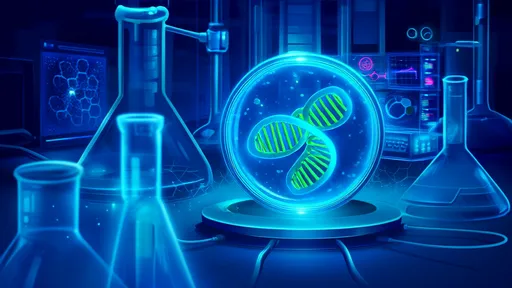
The path to optimization and wider commercialization now heavily relies on biotechnology. Companies and research institutions are no longer simply using naturally occurring bacteria; they are actively engineering them for peak performance. Through adaptive evolution, scientists can train bacterial strains to tolerate higher concentrations of metals, operate across a wider temperature range, and work more efficiently. More advanced genetic engineering holds the promise of creating super-bugs designed for specific ore types or to withstand particularly toxic elements like mercury or arsenic. This biotechnological arms race is crucial for improving leach rates, recovery yields, and overall process economics, making biomining competitive with even more types of mineral resources.
Despite its promise, scaling biomining to its full potential is not without significant challenges. The process is inherently slower than smelting, with leach cycles taking months or even years, which can impact cash flow and requires careful long-term planning. Managing the vast biological reactors, whether they be heaps or stirred tanks, demands a sophisticated understanding of microbiology, hydrology, and chemistry to prevent process upsets. There are also environmental considerations beyond the clear air quality benefits. The resulting leachates, while stripped of their target metal, are still acidic and contain other dissolved metals, requiring robust water treatment systems to prevent contamination of local watersheds.
Looking forward, the role of biomining is set to expand beyond traditional ore processing. One of the most exciting frontiers is in the realm of urban mining—the extraction of valuable metals from electronic waste (e-waste). Circuit boards, smartphones, and batteries contain a complex mix of metals, including copper, gold, silver, and rare earth elements. Bioleaching presents a more sustainable and less toxic alternative to the current practices of acid leaching or informal burning used in many parts of the world. Research is intensifying to develop specialized microbial consortia capable of efficiently and selectively mobilizing metals from this challenging waste stream, turning a growing global pollution problem into a source of valuable materials.
In conclusion, the commercialization of biomining with acidophiles marks a profound shift towards a more sustainable and efficient paradigm for metal production. It is no longer a futuristic concept but a present-day reality, providing a critical tool for supplying the metals essential for modern society while dramatically reducing the environmental cost of their extraction. As biotechnological advancements continue to accelerate, overcoming current limitations related to speed and application range, these microscopic miners will undoubtedly claim an even larger and more central role in building the materials foundation of a greener global economy.
By /Aug 27, 2025

By /Aug 27, 2025
By /Aug 27, 2025
By /Aug 27, 2025
By /Aug 27, 2025
By /Aug 27, 2025
By /Aug 27, 2025
By /Aug 27, 2025
By /Aug 27, 2025
By /Aug 27, 2025
By /Aug 27, 2025
By /Aug 27, 2025
By /Aug 27, 2025
By /Aug 27, 2025
By /Aug 27, 2025
By /Aug 27, 2025
By /Aug 27, 2025
By /Aug 27, 2025
By /Aug 27, 2025
By /Aug 27, 2025