Long before modern dentistry emerged, our ancient relatives may have been practicing rudimentary forms of dental care. Recent archaeological discoveries suggest that Neanderthals, often misunderstood as primitive brutes, might have used natural resins to fill cavities. This revelation challenges our perception of their cognitive abilities and highlights their resourcefulness in dealing with pain and infection.
The evidence comes from a set of Neanderthal teeth discovered in a cave in modern-day Italy. Researchers noticed unusual grooves and what appeared to be intentional modifications on several teeth. Upon closer inspection, they identified traces of a plant-based resin embedded in the cavities. This substance, likely derived from tree bark, acted as a primitive filling to protect exposed nerves and reduce discomfort.
Why would Neanderthals need dental work? Contrary to popular belief, their diet wasn't solely meat-based. Analysis of dental calculus shows they consumed starchy plants, nuts, and even cooked grains. These carbohydrates, combined with limited oral hygiene, made them susceptible to tooth decay. The pain from cavities could have been debilitating, affecting their ability to chew and ultimately survive. This practical problem demanded a solution, leading to what might be humanity's first attempt at restorative dentistry.
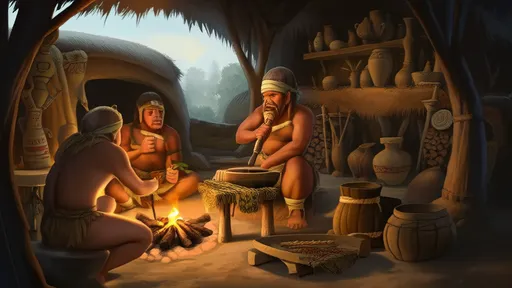
The resin used wasn't randomly selected. Certain trees produce sticky substances with natural antibacterial properties. When heated slightly, these resins become malleable enough to press into cavities, then harden into a protective seal. Some samples show signs of being mixed with beeswax or plant fibers, possibly to improve durability. This indicates a level of experimentation and knowledge transfer among Neanderthal groups.
How did they perform these procedures without modern tools? Researchers speculate that sharpened bone fragments or flint tools could have been used to clean out decay before applying the resin. The process would have been painful, suggesting that Neanderthals valued long-term relief over temporary discomfort. Some teeth show signs of repeated applications, implying they monitored the fillings and maintained them when necessary.
This discovery adds to growing evidence of Neanderthal medical knowledge. Previous findings include the use of medicinal plants and basic wound care. Their understanding of natural materials' therapeutic properties appears sophisticated. The dental resin, in particular, demonstrates problem-solving skills and perhaps even empathy—treating group members who couldn't hunt or gather due to dental pain would have benefited the entire community.
The implications extend beyond dentistry. Working with sticky resins requires precise handling and timing—skills associated with complex cognitive functions. Some researchers argue that manipulating such materials might have contributed to the development of early adhesives used in tool-making. This blurring of medicinal and technological innovation paints Neanderthals as far more capable than traditionally assumed.
What does this mean for our understanding of human evolution? For decades, Neanderthals were depicted as inferior to Homo sapiens. However, findings like these suggest parallel paths of cultural development. Their solutions to dental problems, though different from modern methods, were effective within their environmental constraints. This challenges the linear view of human progress and emphasizes adaptation over inherent superiority.
Modern science is now analyzing these ancient resins. Their antibacterial properties interest researchers developing natural dental products. Some compounds in the resins show potential for fighting antibiotic-resistant bacteria. Ironically, a 50,000-year-old Neanderthal remedy might inspire future medical breakthroughs. Laboratories are attempting to recreate the exact mixtures, testing their durability and microbial resistance under controlled conditions.
The teeth also reveal individual stories. One particularly worn molar shows multiple resin layers applied over years. This Neanderthal likely endured chronic pain but received ongoing care from their group. Another specimen has precise resin placement that would have required steady hands and good lighting—perhaps the work of a "specialist" within their society. These intimate details remind us that behind every archaeological find were real individuals with experiences we can still empathize with today.
As excavation techniques improve, more evidence of prehistoric dentistry may emerge. Sites across Europe and Asia show similar tooth modifications, waiting to be re-examined with this new perspective. Each discovery chips away at the artificial divide between "primitive" and "advanced" medicine, revealing a continuum of human ingenuity across millennia.
The story of Neanderthal dental resin isn't just about ancient fillings—it's about redefining intelligence through material culture. When pain struck, they didn't passively suffer; they observed, experimented, and innovated. In that fundamental human impulse to alleviate suffering, perhaps we're not so different from our thick-browed cousins after all.
By /Aug 5, 2025

By /Aug 5, 2025
By /Aug 5, 2025

By /Aug 5, 2025

By /Aug 5, 2025
By /Aug 5, 2025

By /Aug 5, 2025

By /Aug 5, 2025

By /Aug 5, 2025
By /Aug 5, 2025

By /Aug 5, 2025
By /Aug 5, 2025
By /Aug 5, 2025
By /Aug 5, 2025

By /Aug 5, 2025

By /Aug 5, 2025

By /Aug 5, 2025

By /Aug 5, 2025

By /Aug 5, 2025
By /Aug 5, 2025