The global energy transition has created an unexpected opportunity in the most unlikely of places - abandoned oil wells. As the world shifts toward renewable energy, researchers and energy companies are discovering that these dormant industrial relics may hold the key to a novel form of clean power generation through geothermal-photovoltaic (GPV) symbiotic systems.
Across oil-producing regions worldwide, millions of decommissioned wells sit idle, often requiring costly maintenance to prevent environmental contamination. However, recent technological advances are transforming these liabilities into assets by combining the constant heat from deep underground with solar energy collection at the surface. This innovative approach could potentially turn oil fields into renewable energy farms without the need for entirely new infrastructure.
The Science Behind the Symbiosis
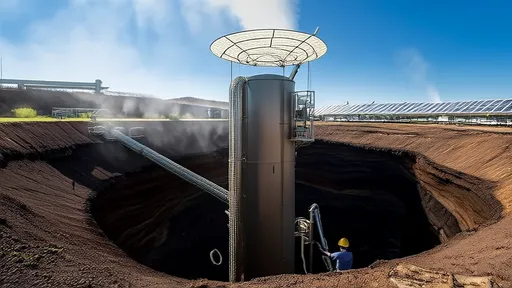
At its core, the GPV system leverages two fundamental properties of abandoned wells: their depth and their existing infrastructure. The typical oil well extends thousands of feet into the Earth, where temperatures can reach 150-300°F even after production ceases. By circulating a working fluid through the existing well bore, this geothermal energy can be harvested to drive turbines or for direct heating applications.
Meanwhile, the surface area surrounding the wellhead - often several acres of cleared land - becomes ideal territory for photovoltaic panel installation. The solar arrays not only generate electricity directly but also help maintain optimal operating temperatures for the geothermal system. During peak sunlight hours, excess solar energy can be diverted to heat the working fluid, while at night, the geothermal system provides baseline power.
Field Tests Show Promising Results
Pilot projects in Texas and California have demonstrated the technical and economic viability of this approach. In the Permian Basin, a retrofitted well achieved 24-hour power generation with 65% geothermal contribution during nighttime and cloudy periods, supplemented by solar during daylight hours. The hybrid system maintained an average output of 1.2MW - enough to power approximately 800 homes continuously.
What makes these systems particularly efficient is the thermal regulation provided by the underground components. Photovoltaic panels typically lose efficiency as temperatures rise, but when coupled with the geothermal heat exchange, the system can maintain optimal operating temperatures for both components. Early data suggests a 15-20% increase in PV efficiency compared to standalone solar farms in similar climates.
Environmental and Economic Benefits
The environmental advantages of repurposing oil wells are substantial. Each retrofitted well prevents the potential methane leaks and groundwater contamination risks associated with poorly maintained abandoned wells. Moreover, the land has already been disturbed by industrial activity, meaning the GPV systems don't contribute to additional habitat destruction.
From an economic standpoint, the existing infrastructure reduces development costs by an estimated 40-60% compared to building new geothermal or solar facilities from scratch. Well casings, access roads, and electrical connections are already in place, dramatically shortening the project timeline. For oil companies facing stranded assets, this provides a viable path to participate in the energy transition while maintaining use of their mineral rights.
Technical Challenges and Solutions
Implementing GPV systems isn't without hurdles. The varying conditions of abandoned wells require customized engineering solutions. Corrosion, scaling, and the integrity of old well casings all present potential issues. However, new materials and monitoring technologies are addressing these challenges.
Advanced fiber-optic sensing systems now allow real-time monitoring of well integrity and fluid temperatures at multiple depths. Non-corrosive working fluids and downhole heat exchangers have extended equipment lifetimes in test projects. Perhaps most importantly, machine learning algorithms are being deployed to optimize the balance between geothermal and solar inputs based on weather patterns and grid demand.
Policy Landscape and Future Potential
The regulatory environment is gradually adapting to accommodate this new approach. Several U.S. states have created "clean energy repurposing" tax credits for abandoned well conversions, while the federal government has included provisions for such projects in recent infrastructure bills. Similar policy developments are emerging in Canada, the North Sea region, and the Middle East.
Looking ahead, the potential scale is enormous. The U.S. alone has over 3 million abandoned oil and gas wells. If even 10% prove suitable for GPV systems, they could generate an estimated 15-20GW of continuous clean power - equivalent to 15-20 nuclear power plants. When applied globally, particularly in oil-rich regions transitioning their economies, the impact could be transformative for both energy production and emissions reduction.
A Model for the Energy Transition
The geothermal-photovoltaic symbiotic model represents more than just technical innovation - it offers a philosophical blueprint for the energy transition. Rather than viewing fossil fuel infrastructure as purely obsolete, this approach finds value in repurposing industrial artifacts for clean energy generation. It bridges the gap between legacy energy systems and renewable futures.
As field tests continue and technology improves, GPV systems may become a standard feature of post-oil landscapes. What began as environmental liabilities could end up powering the very transition that made them obsolete, completing an ironic but promising circle in energy history. For communities built around oil production, this technology offers hope for economic continuity amid energy system transformation.
The coming decade will likely see this niche technology either prove its scalability or reveal unforeseen limitations. But for now, the vision of turning environmental problems into energy solutions continues to gain momentum, one abandoned well at a time.

By /Aug 5, 2025

By /Aug 5, 2025

By /Aug 5, 2025

By /Aug 5, 2025

By /Aug 5, 2025

By /Aug 5, 2025

By /Aug 5, 2025

By /Aug 5, 2025

By /Aug 5, 2025

By /Aug 5, 2025

By /Aug 5, 2025

By /Aug 5, 2025

By /Aug 5, 2025

By /Aug 5, 2025

By /Aug 5, 2025

By /Aug 5, 2025

By /Aug 5, 2025
By /Aug 5, 2025

By /Aug 5, 2025
By /Aug 5, 2025